
Lawrence City Directory Holdings
Lawrence city directories survive across several custodians, and the year runs are not uniform. The Helen Osma Local History Room at Lawrence Public Library is the best first stop. Its holdings begin with intermittent volumes in the nineteenth century, pause and vary through the early twentieth century, then become nearly complete with Polk editions from 1961 onward. Digital Douglas County History supplies selected page images online. Watkins Museum and KU's Spencer Research Library add files, books, maps, and source context that can fill gaps in the library shelf.
| Lawrence collection | Date span | Keeper | How to consult it |
|---|---|---|---|
| Early city directories | 1860, then intermittent through 1930 | Lawrence Public Library, Watkins, Spencer | Books, scans, finding aids, and staff request |
| Polk city directories | 1961 to present, nearly complete | Lawrence Public Library | Local History Room consultation |
| Telephone directories | 1916; sporadic 1930s; nearly complete 1940s-2000s | LPL and Digital Douglas County History | Room holdings and selected free scans |
| Sanborn maps and aerials | Maps 1883-1949; aerials 1937-2024 at intervals | LPL, Spencer, city and county map collections | In person and selected online map tools |
The gaps matter. A missing name may reflect a missing year, a limited inclusion rule, or a household account under another name. It does not prove absence from Lawrence. Ask staff which format survives for the target year, then cite the volume or collection exactly.
Lawrence Directories Go Digital
Digital Douglas County History supports keyword, Boolean, exact-phrase, item, file, and collection searching. The collection reported 1,555 items when researched, including directories, telephone books, neighborhood collections, mortuary books, and obituary indexes. Search metadata first, but inspect the page image or PDF before recording a fact. Optical text and item descriptions can omit abbreviations or misread old print.
The 1866 Lawrence City Directory and Business Guide is one strong page-level source. Its item record supplies title, date, publisher context, and downloadable media. The digital 1866 directory entry shows why the image matters: a single page can join a name, a business, and a street address in ways a short search result cannot.
Lawrence Directory Help Desk
The Helen Osma Local History Room is on the lower level of Lawrence Public Library. The Kansas Collection does not circulate, so plan to use it there or ask staff for a focused check. The Ask Desk offers phone, email, live chat, and Book a Librarian help. A useful request gives the surname or exact address, a narrow year range, and the kind of source wanted.
Library staff can also direct a search into Douglas County census microfilm, Lawrence-area newspapers from 1854 through February 2013, the 1854-1992 marriage index, and the clipping index. Those sources help decide whether a person who disappears from one city directory moved, died, changed names, or simply was not listed.
Lawrence Archives Beyond the Shelf
The Watkins Museum research room holds a local-history index, photographs, maps, oral histories, yearbooks, clippings, tax and house material, and many deed abstracts. KU's Spencer Kansas Collection adds newspapers, manuscripts, architectural records, and maps. Its Douglas County guide documents probate journals from 1855, district court journals from 1863, tax rolls from 1853 through 1967, and appraisal records from 1964 through 1988.
These are not duplicate shelves. Watkins is strong for local buildings, families, schools, and organizations. Spencer is strong for university and regional manuscript context. The Lawrence Public Library remains the simplest first contact. Move to the archive whose collection description fits the missing link.
University ties can be especially clear in the 1946-47 KU directory, whose fields include a name, title, department, residence, KU phone, and residential phone. School newspapers and yearbooks at Watkins and Spencer can test an affiliation without turning it into a claim about every person at an address. Historical church and organization files work the same way. Cite the group, year, and source role, since no verified current public membership directory for Lawrence congregations, clubs, or fraternities was found.
Read Lawrence Directory Entries
A Lawrence city directory entry must be read under that edition's own rules. The 1860-61 description emphasized male citizens, residences, and institutions. The 1866 and 1875-76 books include residents and businesses. Later volumes may add a spouse, occupation, workplace, owner or occupancy notation, length of residence, and a reverse-address section. Never assume that a field present in a Polk volume also appears in an early book.
| Printed name | Initials, surname spelling, and any spouse or widow notation shown by that edition |
|---|---|
| Role or trade | Occupation, organization, employer, or business relation when printed |
| Street line | House number, street, direction, and residence or boarding marks |
| Household status | Owner, renter, householder, or length-of-residence marks in editions that include them |
| Source key | Edition, publisher, year, page, and abbreviation page needed to interpret the entry |
- Criss-cross directory
- A later directory section arranged by street and house number instead of surname.
- Householder index
- A list centered on the person named for a household, which may omit other people at the address.
- Abbreviation key
- The volume's own legend for short forms, symbols, occupations, and residence terms.
Save the key page with the entry. A bare transcription can turn an edition-specific mark into a false fact. Also keep the printed street form even when a modern map spells or formats it another way.
Lawrence Publishers Across Time
Publisher changes help identify the right volume. Boughton & McAllaster produced the 1866 Lawrence City Directory and Business Guide. Stenhouse & Sanders published the 1875-76 directory. Later reference lists identify Polk and Calnon editions, including years such as 1871, 1888, 1891, 1903, 1909, 1911, 1914, 1915, 1917, 1923, 1925, 1928, and 1930.
The sequence is not proof that every named year survives at every Lawrence custodian. Treat a bibliography as a lead, then confirm the actual copy, reel, scan, or call number with LPL, Watkins, or Spencer.
| 1860-61 | Early directory description with a limited stated inclusion rule |
|---|---|
| 1866 | Boughton & McAllaster directory and business guide |
| 1875-76 | Stenhouse & Sanders resident and business volume |
| 1916 | Lawrence Home Telephone Company directory evidence begins |
| 1961 onward | Polk run becomes nearly complete in local holdings |
One Lawrence Directory Page
The 1866 digital item records a circulating library and reading room above a drugstore at 90 Massachusetts Street. That small detail shows the value of inspecting a city directory page, not just extracting a name. The same line can preserve a building use, a civic space, a business relationship, and the printed address of its time.
Massachusetts Street is central to Lawrence's state-named grid. When a historic entry lacks a compass direction or uses an old form, preserve it exactly. Then compare a Sanborn map, later directory, or current atlas before claiming that the old and modern address refer to the same place.
Other Lawrence institutions create their own trails. Haskell-related yearbooks and newspapers may identify students and events more precisely than a general directory. Cemetery records for Oak Hill, Memorial Park, and Maple Grove can supply a burial location and memorial lead. Pair those with the LPL obituary or mortuary-book collection, then keep the burial entry distinct from a death certificate.
Lawrence Records Fill Directory Gaps
When no directory survives for the needed year, pivot to the public record created for the event. Douglas County Clerk pages can orient the search, while a narrow Kansas Open Records Act request can seek a known record by office, date, address, and format. The Douglas County KORA page explains the county route and three-business-day response expectation.
The official county sources shown below are access routes, not resident lists. The Douglas County Clerk identifies county administrative custody and services.
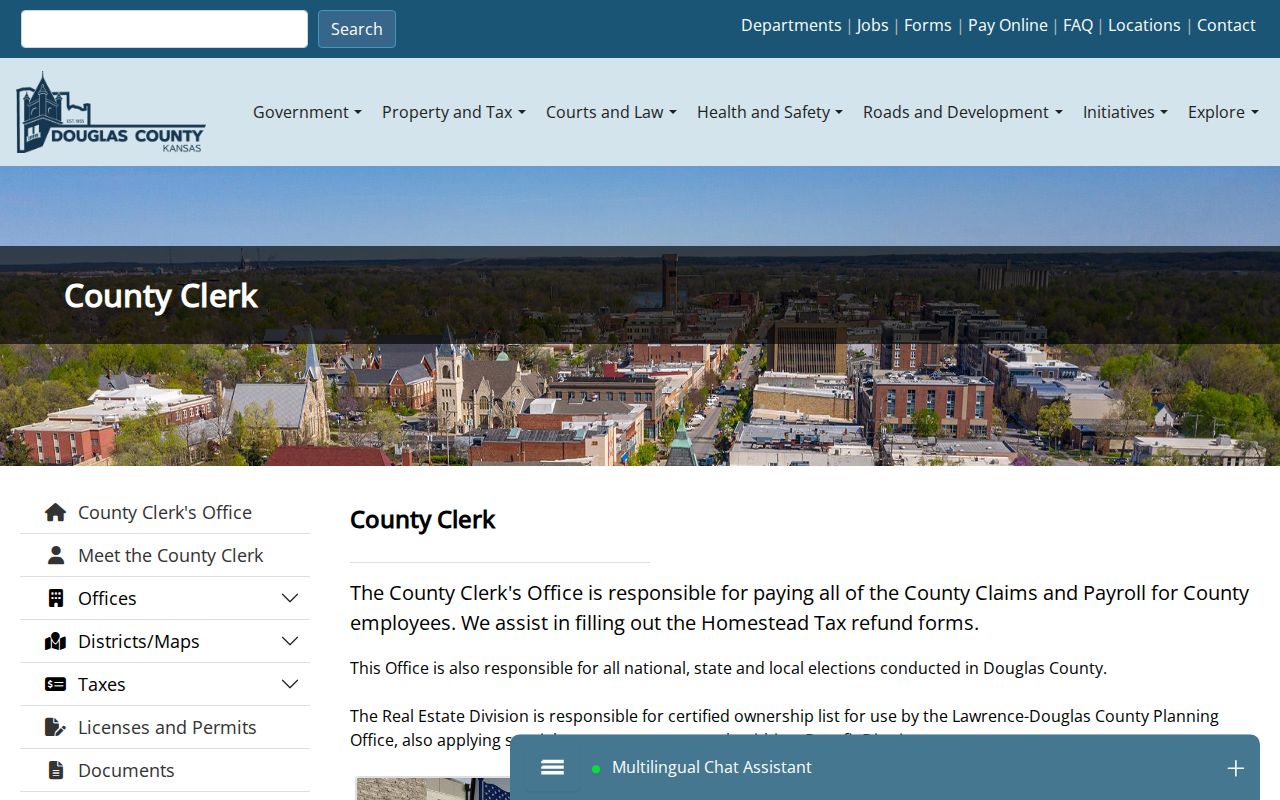
Use that office map to distinguish county records from the City Clerk, Register of Deeds, and District Court.
The county's voting and elections page documents its separate election role.
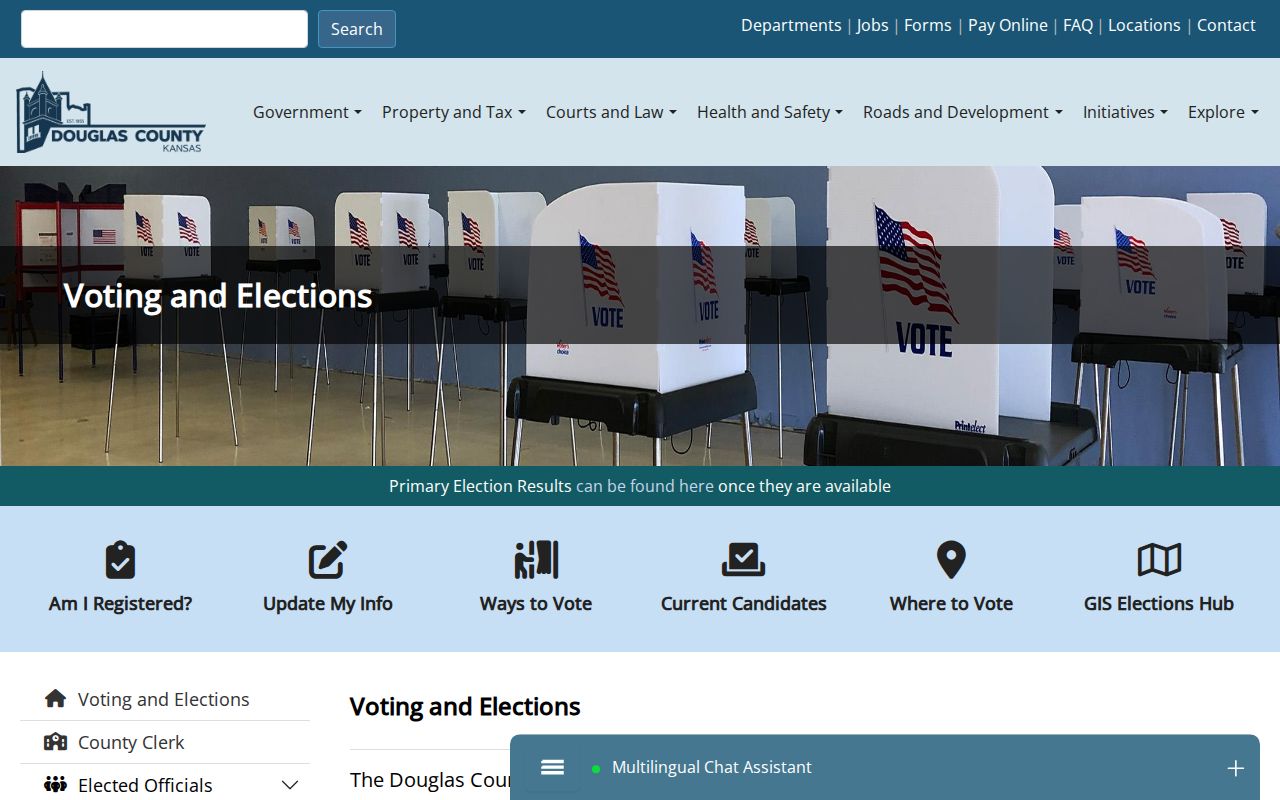
Historical election news may aid genealogy, but a current registration tool is not a substitute for a dated Lawrence directory.
Lawrence Directory Office Fallbacks
The county open-records instructions show how to ask for a specific public record when a shelf or portal cannot answer the question.
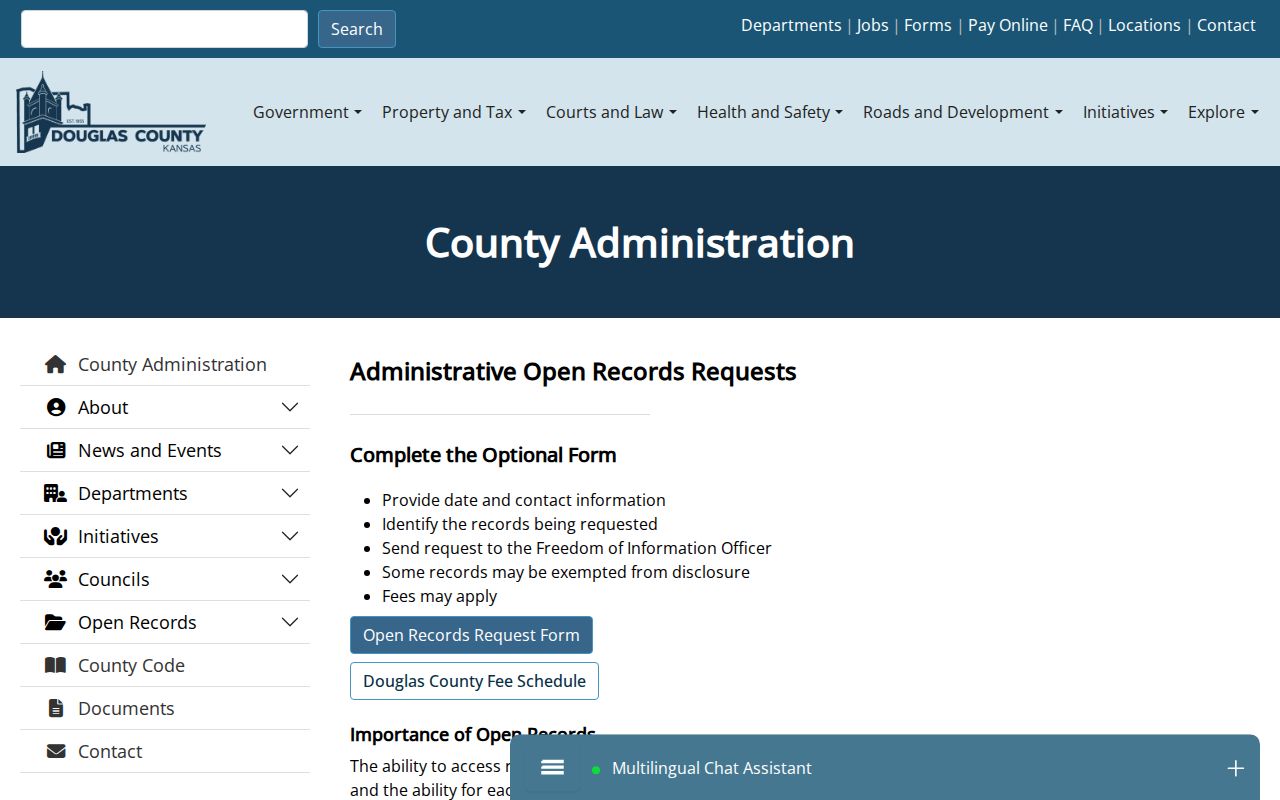
A focused request names the custodian, record class, date range, address, and desired format. It does not ask an office to build a biography.
For a known court file, the Douglas County court-record request is a distinct route.
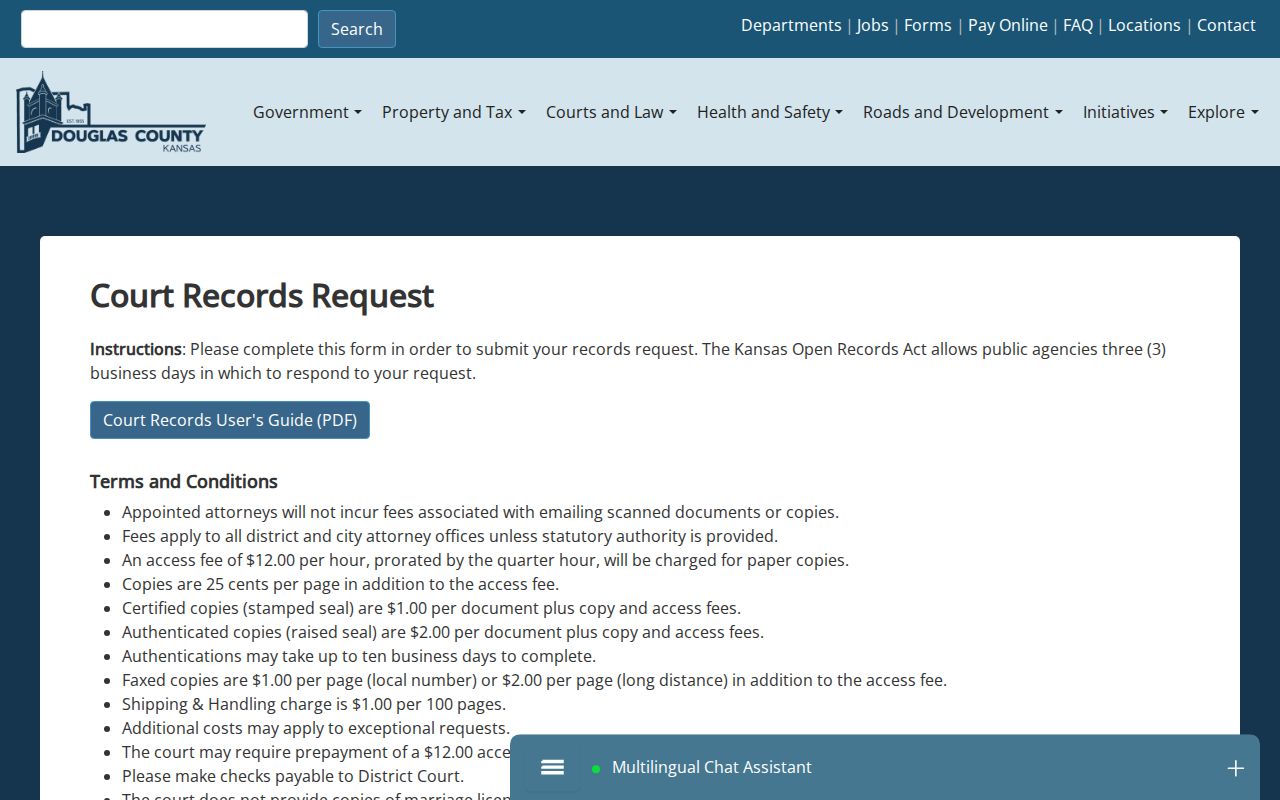
Use a case number and document date when possible. Older court material may require the courthouse or Spencer, especially because most county court records from 1855 through 1863 were destroyed in the Quantrill raid.
Trace Families in Lawrence Directories
A family trail works best when each Lawrence city directory result stays tied to its year and role. Start with the volume nearest a known event. Follow the surname in nearby editions, then use reverse-address pages and the public census to test the household link.
- Search the surname in the nearest available edition. Record spelling, initials, role, address, year, and page.
- Check the next earlier and later volumes. Mark moves, spouse notes, business links, and gaps without guessing their cause.
- In a later reverse section, search the address. Separate the named householder or subscriber from all possible occupants.
- Pair public census years through 1950 with the directory years around them. Compare household names and the enumerated address.
- Test an endpoint with LPL obituary and mortuary indexes, Lawrence cemetery records, newspapers, or an eligible vital record.
A disappearance remains an open question until another source explains it. A person may have moved, died, changed a printed name, lived under another householder's entry, or skipped an edition. The careful conclusion is dated and limited: the source places the named role at that Lawrence address in that edition.
Maps add a second kind of proof. Sanborn sheets from 1883 through 1949 show building footprints and uses, while county aerial photographs begin in 1937 and recur at intervals. Neither names a resident. Together with a directory entry, however, they can show that the printed address and a building occupied the same block at the same time. Current parcels and the Lawrence Atlas finish the location crosswalk, but they should never be used to rewrite what the old volume actually printed.